[ APP REDESIGN & DESIGN SYSTEM CREATION ]
Nourish
Less diet app, more kitchen companion.
This project was done for a stealth-mode startup. Nourish is a made-up name, and the real product is under NDA.
[ Role ]
Brand Designer & Visual Strategist
[ Timeline ]
3 months
[ Status ]
Shipped & Live
[ Scope ]
[ THE BRIEF ]
But the brand felt like it was apologizing for it. Clinical. Transactional. Like you were signing up for punishment, not a lifestyle change. The challenge: design a visual identity that matched what the product actually did for people. Helped them eat better without making eating a project.
[ THE PROBLEM ]
Typography
Generic. Felt corporate, not warm. No personality overall
Colour Palette
Cold. Clinical. Like a medical app, not a nutrition companion.
Imagery
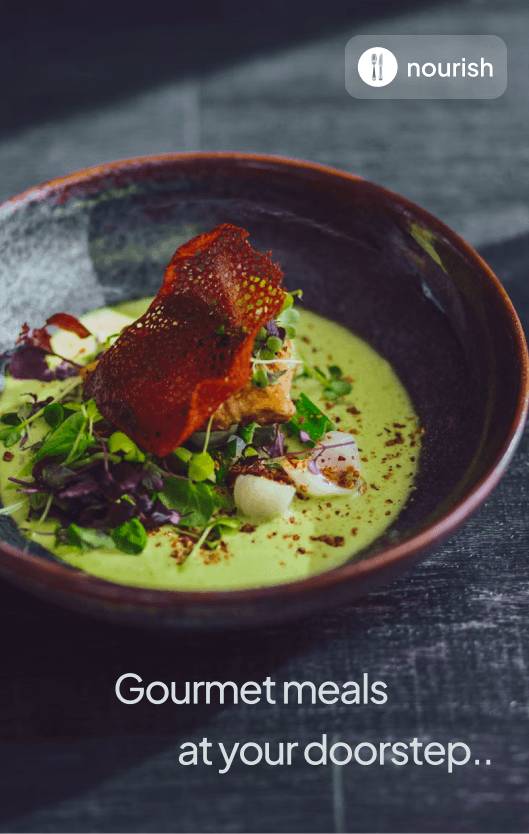
Stock photos of salads. Sterile. No warmth or joy.
Social Presence
Transformation photos. Calorie counts. The opposite of inviting.
[ 01 / THE STARTING POINT ]
Sometimes a brand doesn't need a revolution. It needs a better mirror.
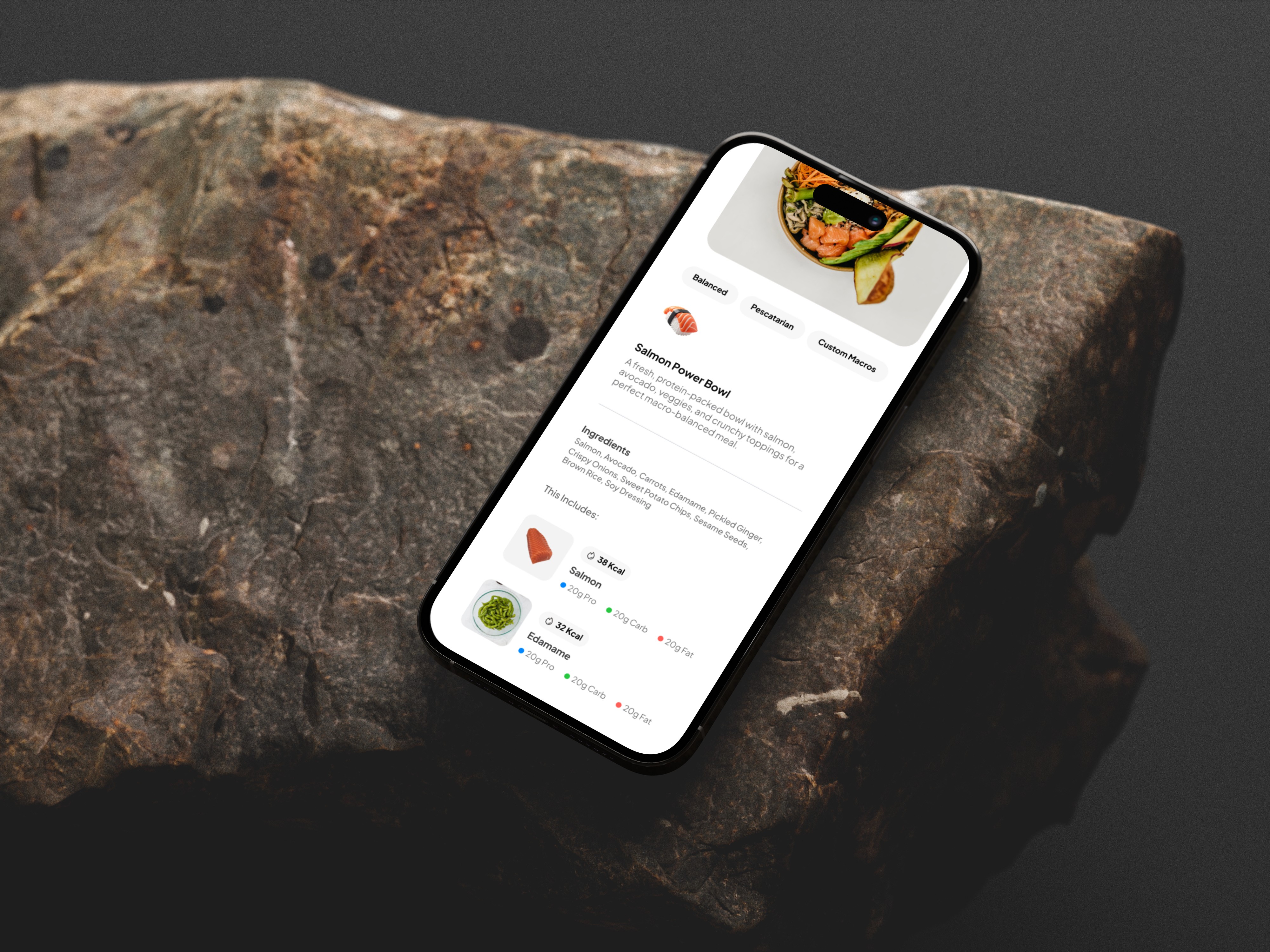
Nourish had the product, a meal-planning app with real nutritional intelligence behind it. What it didn't have was a visual identity that matched the warmth and intention of what it actually did for people. The existing brand felt clinical. Transactional. Like it was selling you a prescription, not a lifestyle.
The ask was clear, even if the path wasn't: make this feel like something people want to open every morning, not something they feel guilted into using. I led the brand evolution end-to-end, working closely with the founders, the product team, the dev team, and an external agency.
[ 02 / BEFORE THE PIXELS ]
Who's actually using this?
What should the brand feel like?
What's needed?
01
Personal
02
Warm
03
Uncomplicated
[ 03 / BUILDING THE BONES ]
Nothing here is decorative. It all means something.
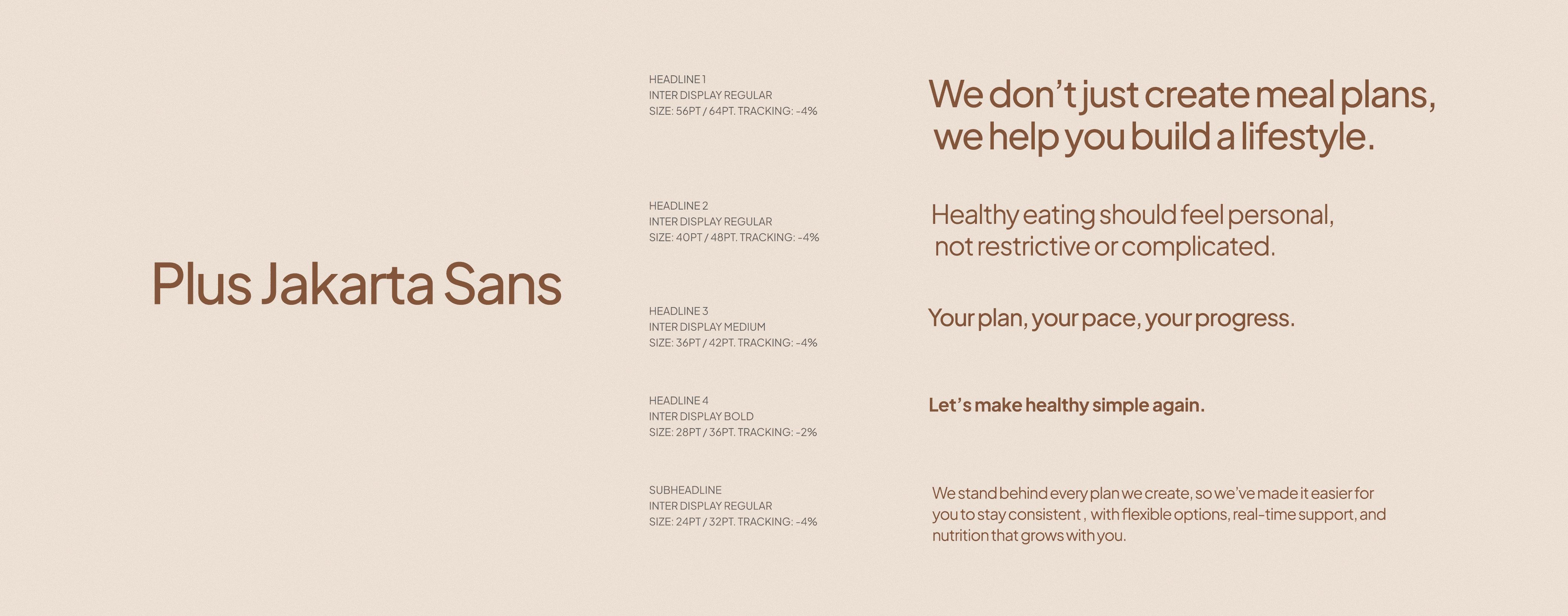
Typography: Plus Jakarta Sans
Nourish needed to feel like a friend who knows about food, not a clinic, not a fitness brand. Plus Jakarta Sans walks that line: geometric enough to read clean on small screens, rounded enough that a recipe card doesn't feel like a medical chart. We kept it to two weights, Regular for body, SemiBold for emphasis, because a nutrition app already has enough information competing for attention. The type shouldn't add to the noise.
Colour: Grounded warmth
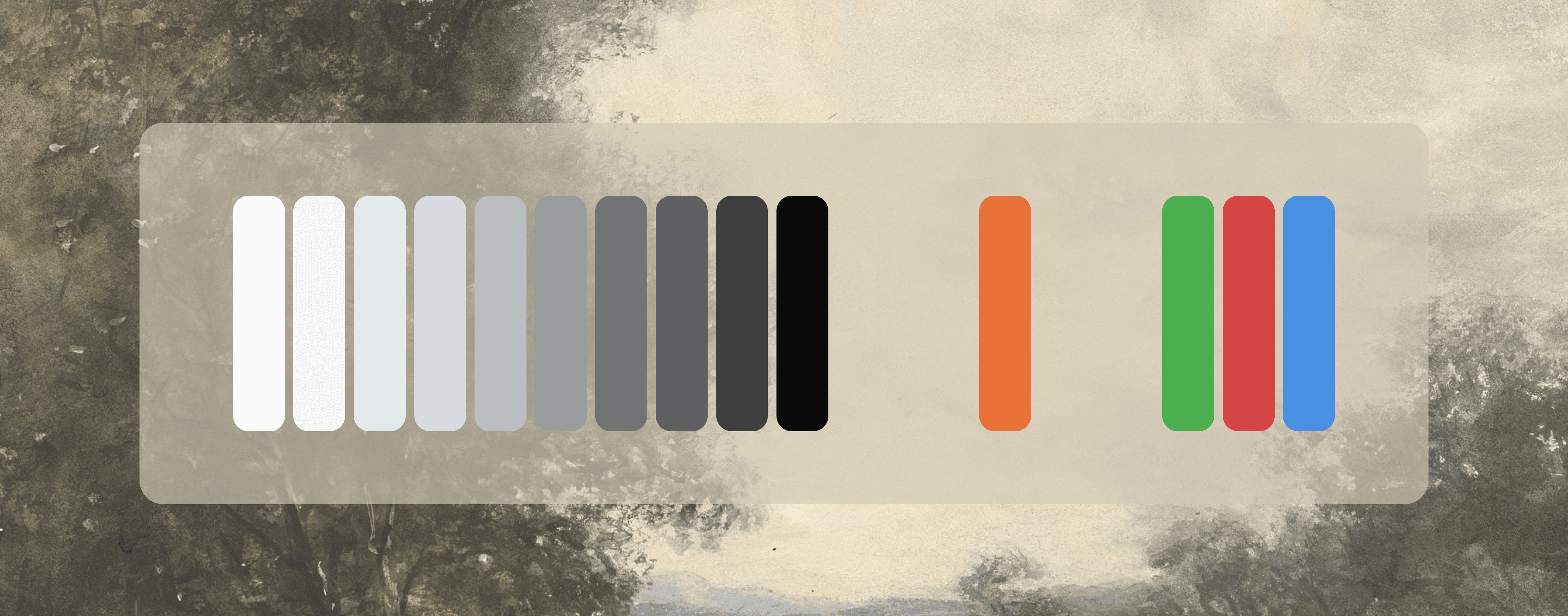
Most food apps blast you with colour. We pulled back. Warm greys and muted blacks became the canvas, quiet enough that a photo of dal or a smoothie bowl could be the loudest thing on screen. The accent orange came from the food itself: turmeric, roasted carrots, a good masala. It signals warmth without screaming "health." Greens, corals, and soft blues only show up where they earn it: confirmations, alerts, category tags. Every colour has a job. None of them are just decoration.
Iconography: Two layers
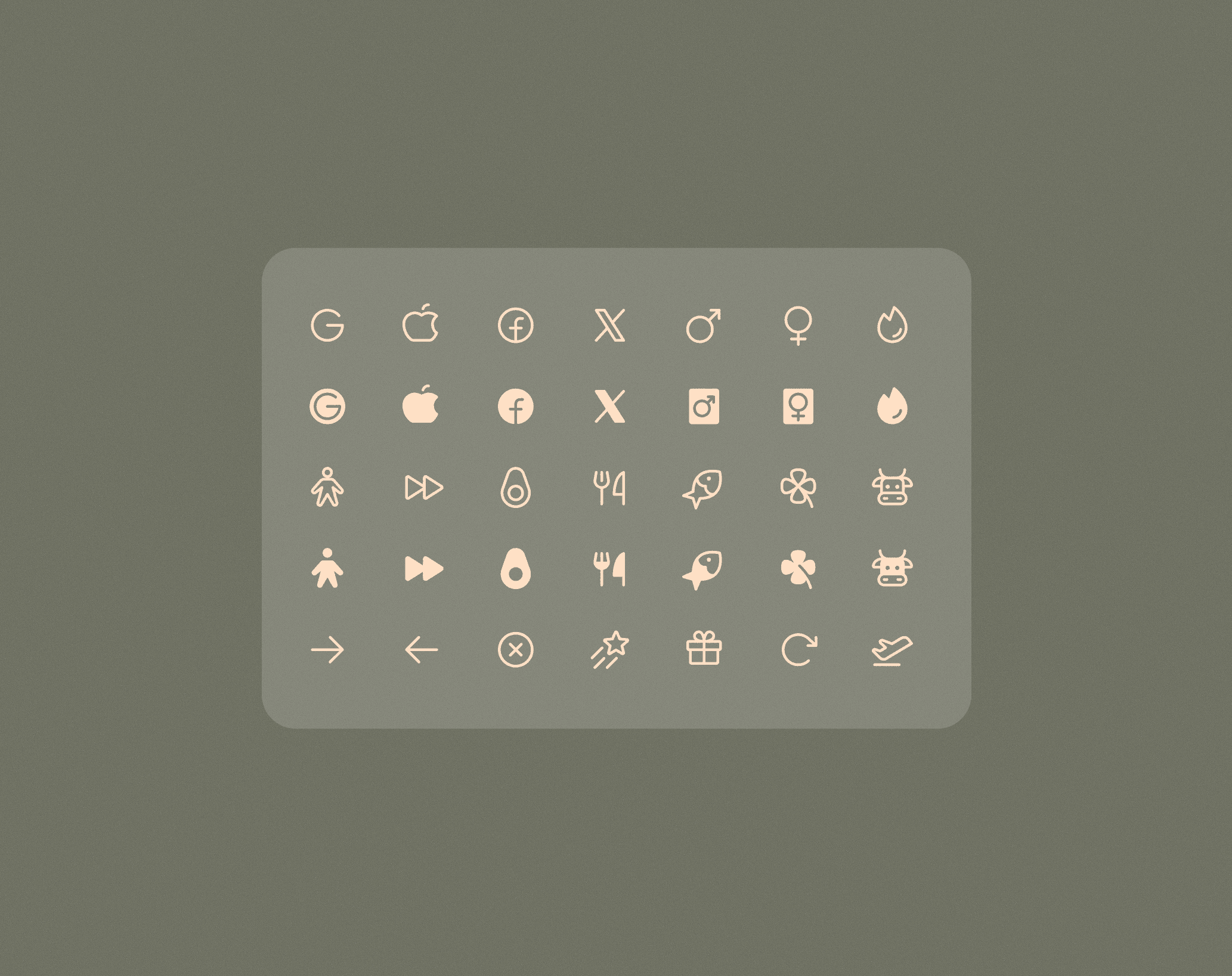
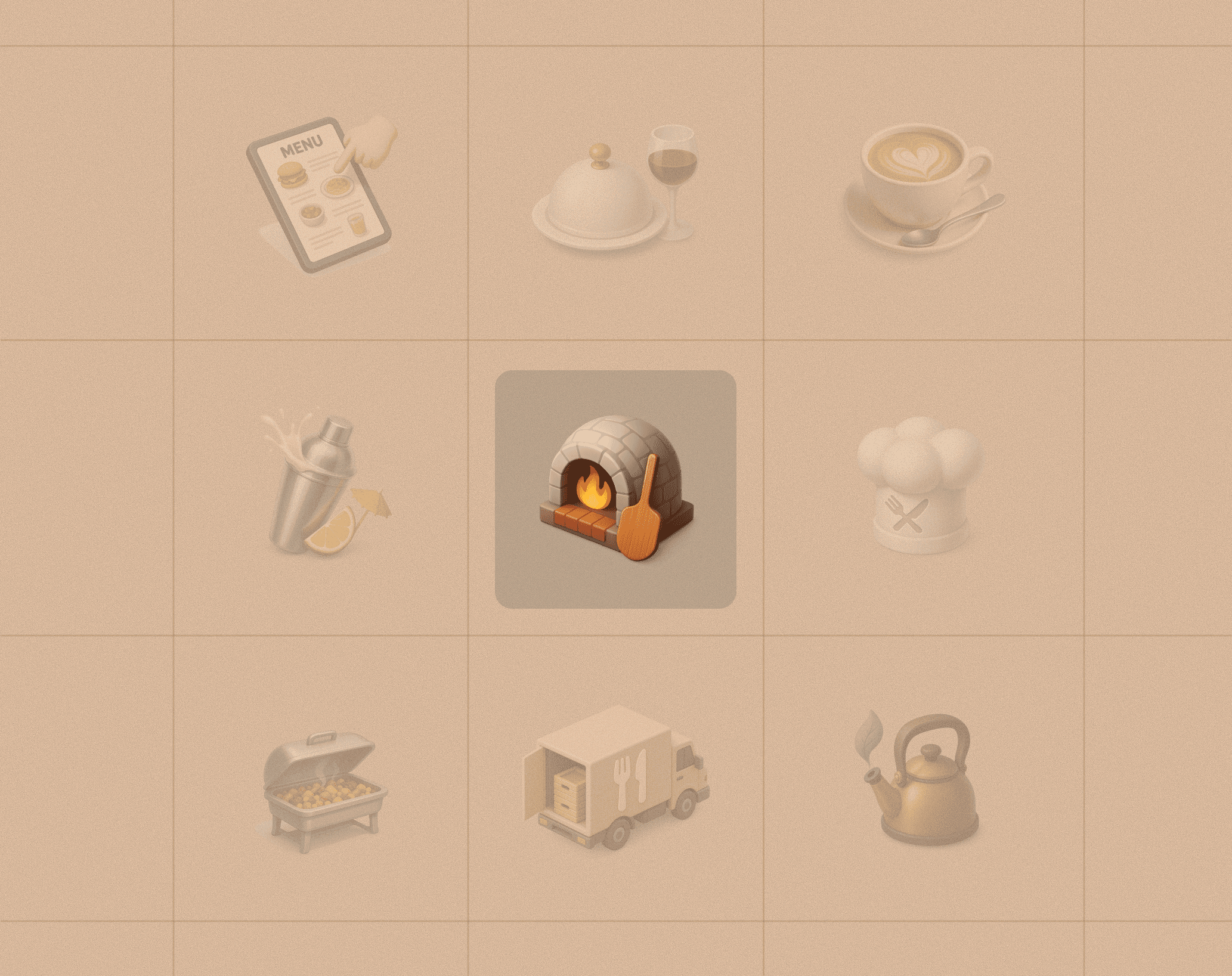
Two icon sets, two jobs. The line icons handle navigation and utility. They stay out of the way and let you tap without thinking. The 3D icons are where Nourish gets to have a personality. Scrolling through food categories should feel like flipping through a cookbook, not filing through a spreadsheet. A soft-rendered garlic bulb or a little ceramic bowl, they give the app a texture that flat icons never could. Function in one layer, feeling in the other.
[ 04 / FROM SYSTEM TO SCREEN ]
Where the brand lives
The App
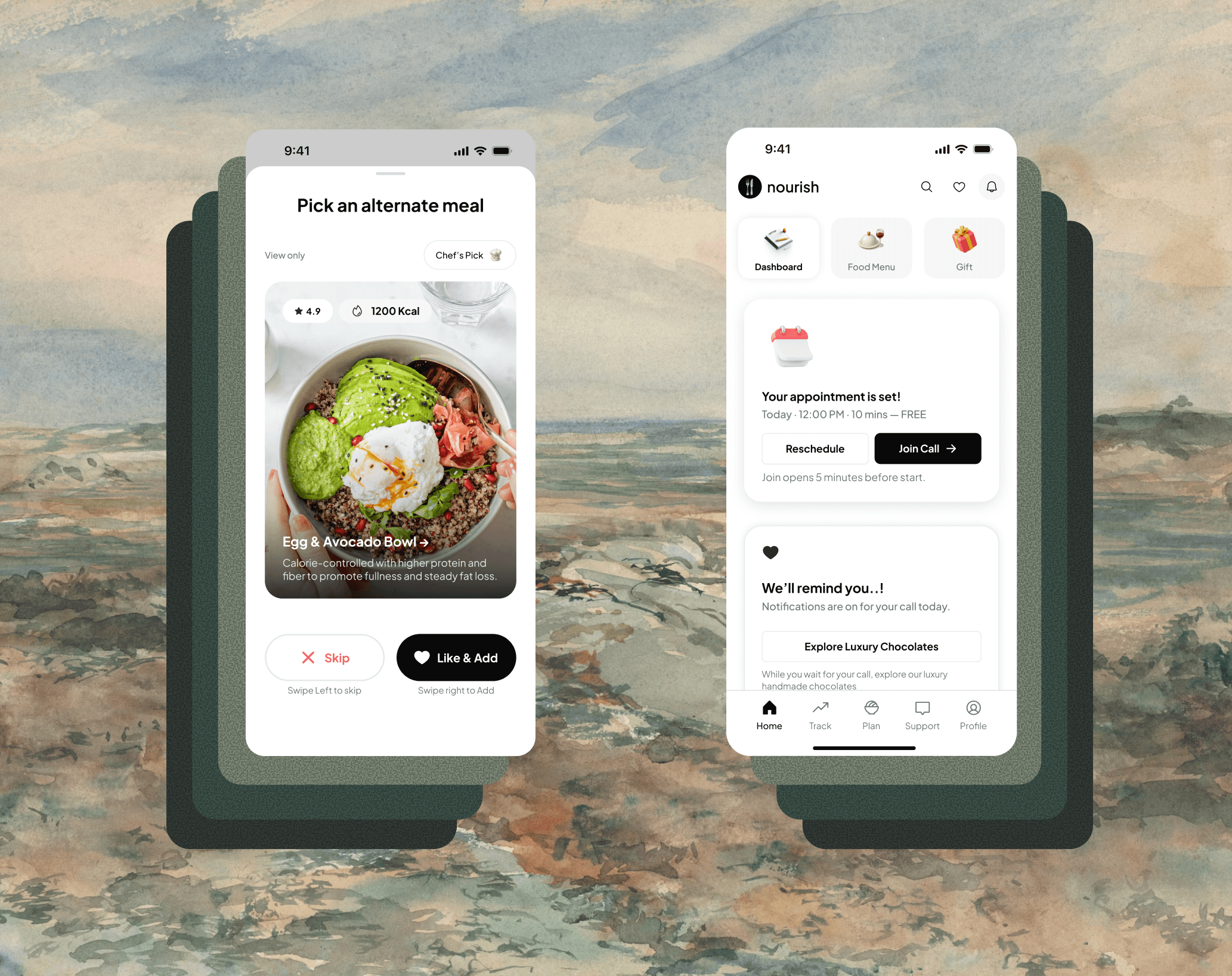
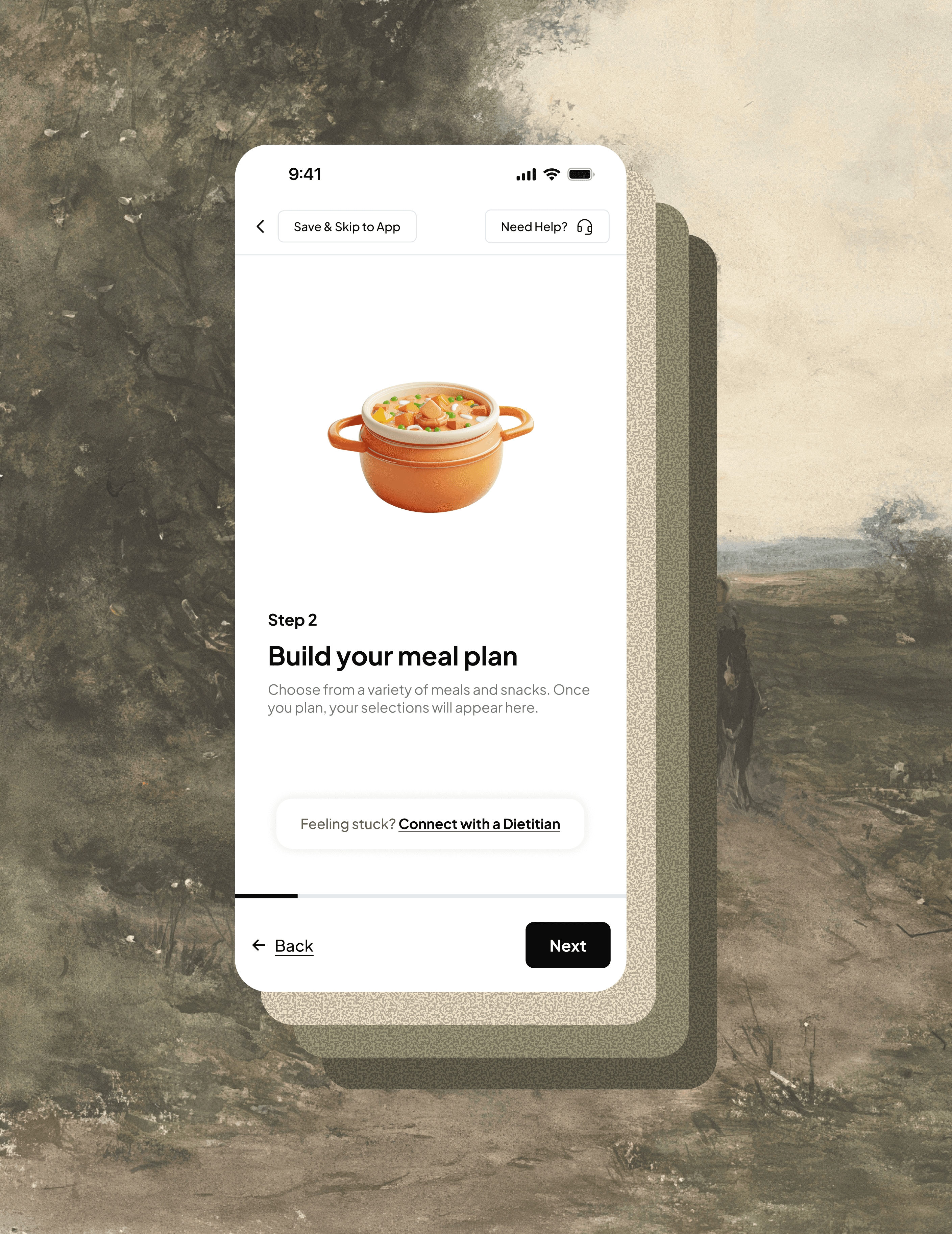
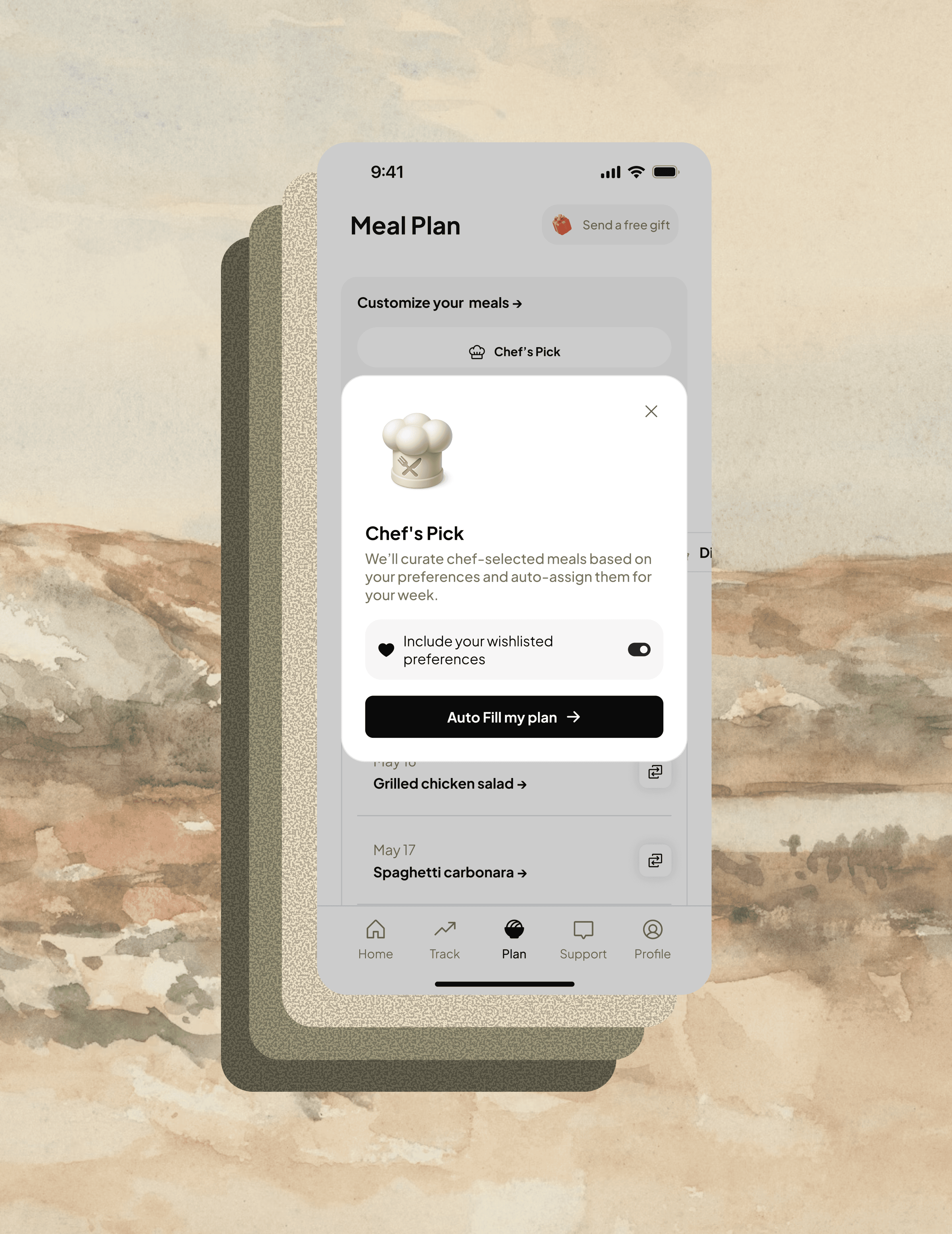
Onboarding doesn't interrogate you. It asks what you like to eat, how your mornings work, what cooking actually looks like in your kitchen. Meal plans feel curated, not prescribed. And tracking doesn't guilt-trip. It celebrates a home-cooked Wednesday the same way it would a perfect macro split. The whole app was designed to meet people where they are, not where a fitness brand wishes they were.
[ 06 / WHAT STAYED WITH ME ]
Brand evolution is harder than building from scratch.
You're working with existing equity, existing assumptions, and a team that's emotionally attached to what exists. The art is knowing what to keep, what to let go, and how to make the change feel inevitable rather than imposed. This project taught me that the best brand work isn't about making things look different. It's about making them feel true.
This case study is a work in progress. More updates coming soon.